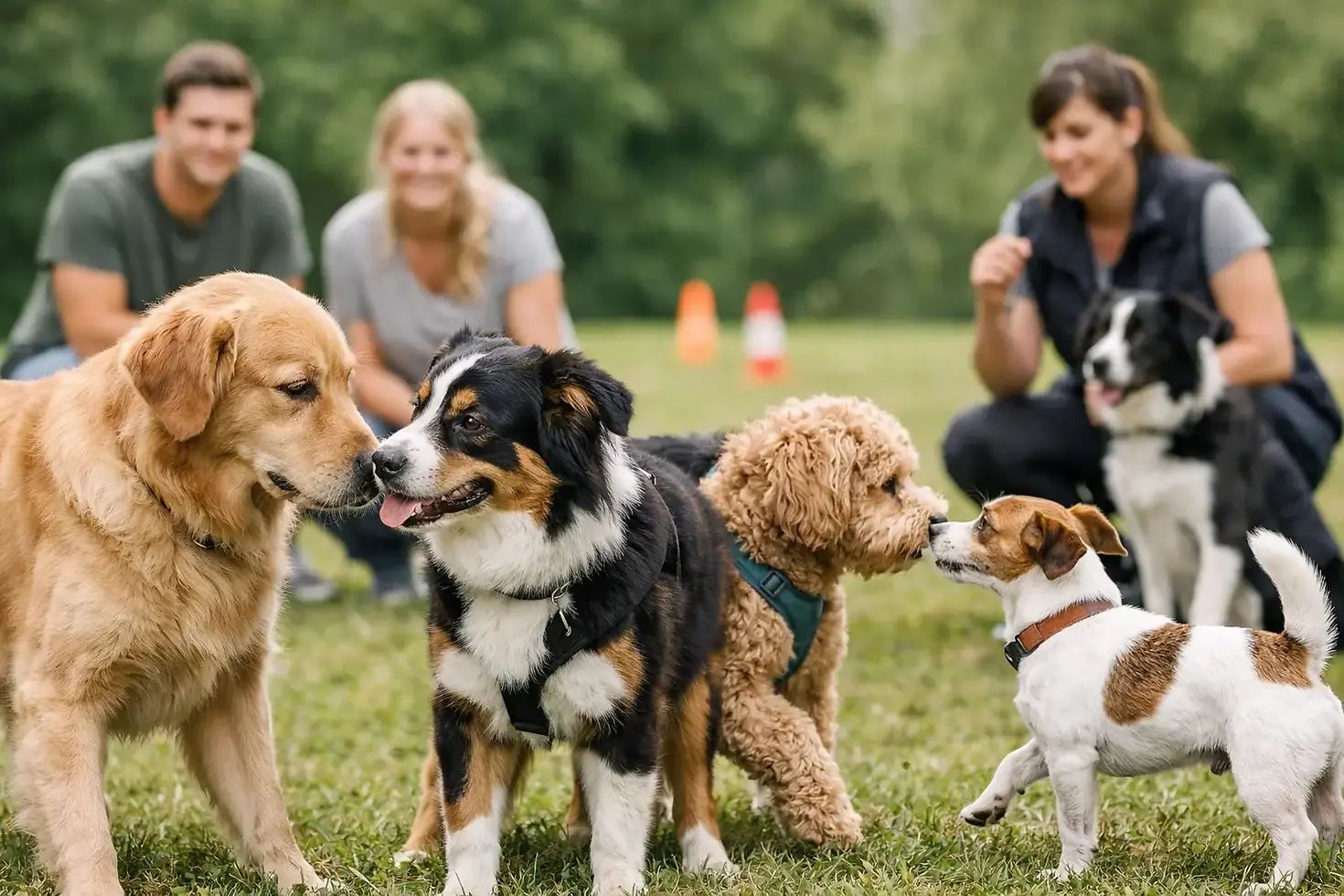
Dog Socialization Classes That Actually Help
A lot of dogs don’t need to be the life of the party. They just need to walk into a room, see another dog, and stay relaxed. That’s where dog socialization classes can make a real difference. Done well, they help dogs build confidence, practice good manners, and learn that the world is not nearly as dramatic as it seems.
For busy Seattle dog parents, that matters fast. A dog who can handle new people, new dogs, city sounds, and shared spaces with less stress is easier to live with, easier to bring along, and usually a lot happier day to day. Socialization is not about forcing friendships. It’s about helping your dog feel safe, steady, and capable.
What dog socialization classes are really for
The phrase gets tossed around a lot, and sometimes it gets reduced to one simple idea: let dogs play together. That can be part of it, but it’s not the whole picture. Good dog socialization classes are structured environments where dogs learn how to exist around other dogs, people, sounds, surfaces, and movement without tipping into fear, chaos, or overexcitement.
In other words, the goal is not nonstop wrestling and zoomies. The goal is emotional balance. A well-socialized dog can greet politely, recover quickly, and stay engaged with their person even when there is a lot going on around them.
That’s especially helpful in urban life. Elevators, patios, sidewalks, daycare drop-offs, guests at home, and neighborhood events all ask your dog to process a lot. Socialization classes give them practice before those moments become hard habits.
Why early socialization helps - and why it’s not just for puppies
Puppies usually get the spotlight here, and for good reason. Early experiences shape how dogs respond to the world. A puppy who has calm, positive exposure to new situations often grows into a more adaptable adult.
But adult dogs can benefit too. A shy rescue, an adolescent dog with too much enthusiasm, or a dog who missed some early exposure can still learn. The approach just needs to fit the dog in front of you. Older dogs may need slower introductions, more space, and shorter sessions. That is not a setback. It is simply smart handling.
This is where expectations matter. Dog socialization classes are not a magic reset button. If your dog has fear, reactivity, or a history of rough interactions, progress may look less like instant playtime and more like calm observation from a comfortable distance. That still counts. In many cases, that’s the better goal.
What to look for in dog socialization classes
Not every class with a few dogs in a room is a good socialization class. The best programs feel organized, clean, and closely supervised. Dogs are grouped thoughtfully, staff step in early, and the pace does not feel random.
A good class will pay attention to temperament, size, play style, and energy level. That matters because not all social skills look the same. A bouncy young doodle may need help learning how to pause and read the room. A quieter dog may need space to watch before joining in. A confident adult dog may do best practicing neutrality rather than play.
You also want an environment where handlers value quality over quantity. More dogs does not automatically mean better socialization. In fact, overcrowded settings can do the opposite by teaching dogs to rehearse rude greetings, overwhelm, or stress.
Look for clear safety standards, vaccinated participants, and staff who can explain why they group dogs the way they do. If the answer is basically let them figure it out, that’s your cue to keep looking.
Signs a class is helping your dog
Progress can be subtle at first, which is why a lot of pet parents miss it. The biggest wins often show up outside class. Your dog checks in with you more on walks. They recover faster after seeing another dog. They can greet without lunging, spinning, or shutting down. They settle more easily in new places.
Inside class, good signs include loose body language, curiosity, the ability to take breaks, and polite disengagement. A dog who can sniff, move away, and then rejoin calmly is showing healthy social skills. Constant intensity is not the benchmark.
You may also notice that your dog seems pleasantly tired after class, not fried. That difference matters. Healthy social learning builds confidence. Too much stimulation can leave a dog wired, cranky, or overwhelmed.
When dog socialization classes are not the right first step
There are dogs who need a little more support before joining a group setting. If your dog panics around other dogs, guards resources, snaps when crowded, or cannot recover once upset, a standard class may be too much too soon.
That does not mean your dog is bad at socialization. It means they may need one-on-one guidance, slower exposure, or a more specialized plan first. Sometimes the kindest thing you can do is skip the group scene until your dog has the skills to handle it well.
This is one of the biggest myths in the dog world: that more exposure always fixes discomfort. It doesn’t. The right exposure helps. Too much can make things worse. Good professionals know the difference.
The human side of socialization matters too
Dogs are always reading us. If you’re tense at every greeting, rushing every interaction, or hoping your dog will just burn off energy, your dog often feels that. The best classes support pet parents as much as dogs.
That means you should leave with a better eye for canine body language and a clearer sense of what your dog enjoys, tolerates, and would rather skip. A big part of socialization is learning when to say yes and when to say not today.
For a lot of urban dog owners, that is a relief. You do not need your dog to adore every stranger and every dog on the block. You need them to move through shared spaces without fear or friction. That is a more realistic goal, and honestly, a more useful one.
How socialization fits into everyday life
The best results usually come when class practice carries over into regular routines. That might mean letting your dog watch the world from a comfortable distance at a neighborhood café, rewarding calm behavior in a lobby, or practicing polite greetings with familiar people.
Short, successful moments add up. Five calm minutes can do more than one overwhelming hour. Socialization is less about collecting big experiences and more about creating enough positive reps that your dog starts to trust the pattern.
That’s one reason community-centered spaces can be so helpful. When dogs get chances to practice around people, movement, and other dogs in a well-managed environment, the learning feels more like real life. And for their humans, it feels a lot easier to keep up with.
At BoneYard Seattle, that pack-minded approach is part of what makes the experience click. Dogs benefit from guided interaction and thoughtful care, while their people get something just as valuable - a place where dog life and real life can actually happen in the same space.
A better question than “Is my dog friendly?”
A lot of pet parents ask whether their dog is friendly enough for class. Fair question, but it’s usually not the most useful one. A better question is whether your dog can learn in a group setting with support.
Some friendly dogs are too overexcited to make good choices. Some reserved dogs are excellent students because they observe well and stay regulated. Some social butterflies need help with manners. Some dogs who seem aloof are actually doing beautifully because they can share space calmly without needing to meet everyone.
That is what good socialization classes help uncover. They show you your dog’s actual style, not just the label you’ve been using.
And once you know that, everything gets easier. You can choose better outings, set better expectations, and build a routine that supports confidence instead of testing it.
If your dog could use a little more ease in the world, start there. Not with pressure, not with a packed room, and not with the idea that every dog needs to be a social star. Just with steady practice, good supervision, and enough positive experiences to help them find their footing - and maybe their pack.


Comments