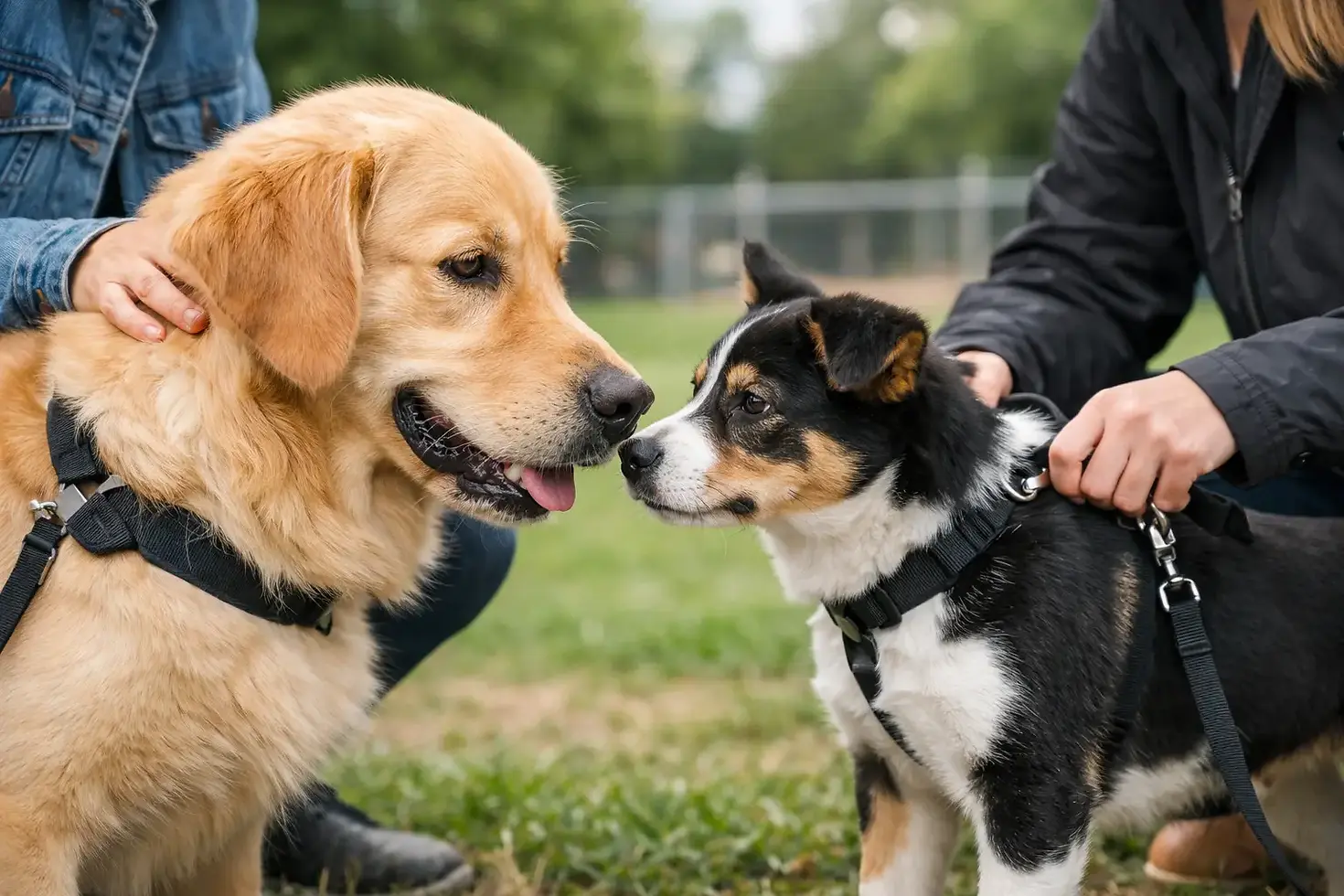
How to Introduce Dogs Safely at First Meet
The first few seconds of a dog introduction can set the tone for everything that follows. If you are wondering how to introduce dogs safely, the goal is not to force an instant friendship. It is to create a calm, low-pressure meeting where both dogs have space to read the room, stay relaxed, and leave with a good impression.
That matters whether you are bringing home a new dog, setting up a playdate, or helping your pup meet another regular at the park. Most dogs do not need a dramatic "best friends" moment. They need a thoughtful start, clear supervision, and humans who know when to slow things down.
How to introduce dogs safely starts before they meet
A safe introduction begins well before the dogs are nose to nose. The biggest mistake people make is assuming a friendly dog can handle any introduction, anywhere, anytime. Even social dogs can feel tense if the setting is crowded, the leash is tight, or one dog comes in overexcited.
Pick neutral ground whenever possible. A quiet sidewalk, open outdoor area, or calm indoor space with enough room to move is usually better than a front doorway or a living room full of favorite toys. Home turf can make some dogs feel protective, and tight spaces can raise the pressure fast.
It also helps to think about each dog’s energy that day. A dog who has been cooped up for hours may need a walk first. A dog who is already overstimulated may need a break before meeting anyone new. Safe introductions go better when both dogs are starting from a more balanced place, not bursting at the seams.
If either dog has a history of fear, reactivity, guarding, or rough play, it is smart to involve a qualified trainer or behavior professional. That is not overreacting. It is good dog parenting.
Read the dogs, not the story you hope for
People often walk into introductions wanting a certain outcome. "They both love dogs." "She just wants to play." "He always settles down." Sometimes that is true. Sometimes the dogs are telling a different story.
Loose bodies, soft eyes, curved movement, and polite sniffing are good signs. So are brief check-ins followed by easy disengagement. Dogs who feel okay do not usually need to prove anything.
On the other hand, stiffness, hard staring, freezing, lip licking, tucked tails, raised hackles, repeated mounting, or nonstop face-to-face pressure can mean the interaction is getting uncomfortable. A wagging tail by itself does not mean a dog is happy. Fast, high, tight wagging can come with tension too.
The sweet spot is interest without intensity. If one dog is trying to create space and the other keeps pushing in, that is your cue to interrupt early. Waiting until there is a blow-up is not giving them a chance. It is asking too much.
The best first meeting is usually a parallel walk
If you want the simplest answer to how to introduce dogs safely, start with movement. A parallel walk lets both dogs notice each other without the pressure of direct contact right away.
Have one handler per dog. Begin with several feet of distance between them and walk in the same direction. Keep the leashes loose and your own energy relaxed. Dogs pick up on our tension quickly, and a death grip on the leash can make a normal moment feel loaded.
As long as both dogs stay loose and curious, you can gradually reduce the distance. Let them glance, sniff the air, and move on. Short, casual moments are better than a long forced greeting. You are looking for "No big deal" energy.
After a few minutes, if both dogs seem comfortable, allow a brief sniff. Then keep moving. That break matters. It prevents the meeting from getting sticky and gives each dog a chance to reset.
Don’t force face-to-face greetings
A lot of humans picture a proper introduction as two dogs walking straight up and sniffing nose to nose. For many dogs, that is actually one of the most intense ways to start.
Dogs usually do better with curved approaches and side-by-side movement. Let them gather information naturally. A quick side sniff followed by moving apart is often more polite than a prolonged stare-down at the end of two tight leashes.
Skip the crowd, too. One new dog is enough information for a first meeting. Adding extra dogs, excited people, food, or a noisy environment can tip things from playful to chaotic fast.
If you are indoors, remove high-value items first. That includes food bowls, treats left within reach, favorite toys, chews, and prized resting spots. Even dogs who are generally easygoing can feel different when resources are involved.
How to introduce dogs safely at home
If one dog is joining the household, do the first meeting outside before bringing them in together. A short walk side by side can take the edge off and make the home entry feel less abrupt.
Once inside, keep things structured. That does not mean stiff or stressful. It just means you are managing the environment so neither dog has to sort everything out alone. Leave leashes on at first if that helps with control, but keep them loose and drag them only if it is safe to do so under close supervision.
Let the dogs explore in short stretches, then separate them for a reset. New housemate energy can be tiring, even when it is going well. Crates, gates, or separate rooms can help both dogs decompress without feeling punished.
Feed them separately at first. Give individual downtime. Keep greetings low-key. Plenty of dogs can share a home successfully and still need boundaries around meals, sleep, and personal space. That is not a red flag. It is normal.
Play is not always as friendly as it looks
Happy dog play can be noisy, bouncy, and full of wrestling. But good play has pauses. The dogs switch roles. One chases, then the other does. They break apart, shake off, and choose to reengage.
Trouble starts when play becomes one-sided or relentless. If one dog keeps pinning, body-slamming, cornering, or ignoring the other dog’s attempts to leave, step in. The same goes for repeated barking in the face, neck grabbing that escalates, or arousal that keeps climbing without a pause.
A cheerful interruption can do a lot. Call the dogs apart, guide them into a brief reset, and see whether both still want to engage. If they do, great. If not, the meet-and-greet may simply be over for the day.
That is worth saying out loud - not every dog needs to play with every other dog. A successful introduction can look like calm coexistence, mutual tolerance, or a polite walk together. Friendship comes in different shapes.
Set dogs up for repeat success
Good introductions are often built over multiple short meetings, not one marathon session. Ending on a calm note is usually better than pushing until someone gets cranky.
For busy city dogs, that pacing really matters. Urban life comes with elevators, sidewalks, shared spaces, and plenty of surprise encounters. The more your dog learns that introductions are predictable and well managed, the more confident they tend to become.
This is also where professional environments can help. In a well-run social setting with trained staff, clean spaces, and thoughtful supervision, dogs get the chance to practice appropriate interactions without the free-for-all energy that causes so many problems. At BoneYard Seattle, that pack-minded approach is a big part of what helps dogs and their people feel at ease.
When to stop the interaction
Sometimes the safest move is to call it early. If one or both dogs are repeatedly stiff, overwhelmed, vocal, hiding behind a handler, or escalating despite resets, the answer is not more exposure. It is more support, more distance, or a different plan.
There is no prize for pushing through a bad first meeting. Dogs remember stressful interactions, and one rough greeting can make future introductions harder than they need to be.
Patience pays off here. A little structure on day one can lead to a much easier relationship later. Slow is not boring. Slow is smart.
Helping dogs meet well is really about protecting the vibe. Keep it calm, keep it clear, and let trust build at dog speed. That is where the good stuff starts.


Comments