
How Dogs Adjust Overnight: What Helps Most
The first overnight away can feel bigger to the human than it does to the dog. You picture the lights going down, wonder whether they will miss their favorite spot on the couch, and hope they understand you are coming back. The good news is that how dogs adjust overnight usually comes down to a few comforting basics: a predictable routine, the right environment, kind people, and enough time to settle into a new rhythm.
Dogs do not need a carbon copy of home to rest well. They need to feel safe, have their needs met, and know what happens next. For many dogs, a well-run boarding stay includes more social time, structure, and attention than a quiet night alone at home would. That can make the transition easier than pet parents expect.
What the First Night Feels Like for Your Dog
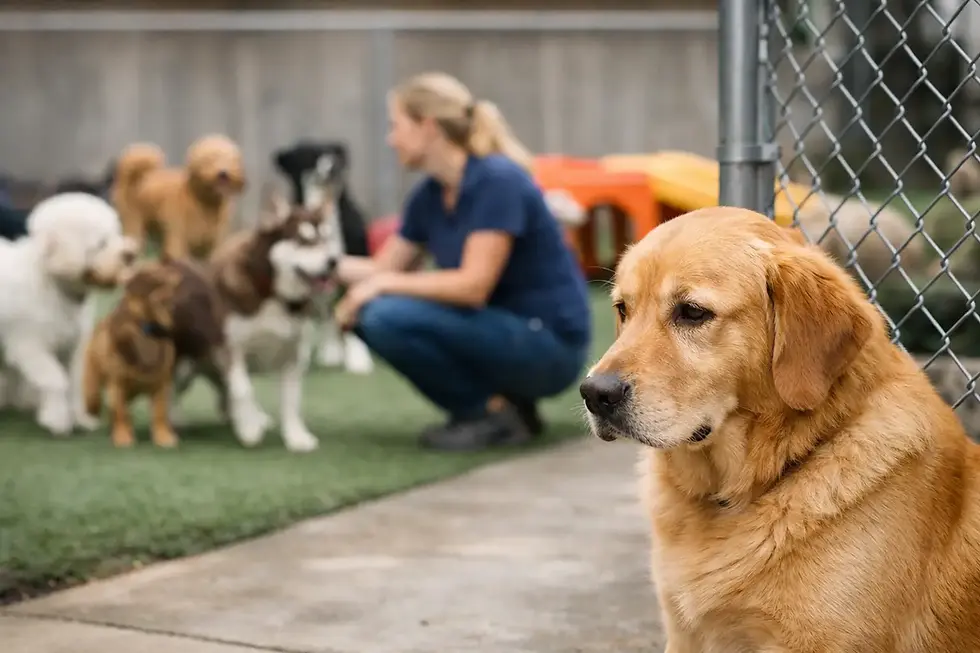
Dogs are observant. They notice a new smell, a different bedtime routine, unfamiliar sounds, and the fact that their favorite human is not nearby. Some walk into a boarding space ready to make friends and claim a cozy resting spot. Others take a little longer, sniffing carefully and watching the room before they relax.
Neither response is a problem. Confidence does not always look like instant enthusiasm, and a dog who is quiet at drop-off is not necessarily unhappy. Many dogs simply need a chance to gather information. Once they have had a potty break, a meal, some appropriate activity, and a calm place to rest, they begin connecting the dots: these people are safe, this is where I sleep, and my person returns after goodbyes.
The first night can be the biggest adjustment, especially for dogs who have never boarded, recently moved homes, or tend to be extra attached to their family. By the second or third stay, many dogs recognize the routine and arrive with a wag that says, “Oh, I know this place.”
How Dogs Adjust Overnight in a New Routine
Dogs thrive on patterns, even when the pattern is different from home. A thoughtful overnight routine gives them clear cues from arrival through bedtime. They learn when meals happen, when they will go outside, when play winds down, and when it is time for quiet rest.
That structure matters because a dog does not need to predict every detail of the day. They just need to experience consistency. When caregivers follow a reliable schedule and respond calmly to each dog’s needs, the environment becomes easier to read.
A good overnight stay also balances activity with downtime. A dog who has enjoyed supervised play, enrichment, and social interaction may be ready for sleep at the end of the day. But tired should not mean overstimulated. The best care teams pay attention to each dog’s energy, play style, age, and comfort level, then give them space to decompress before bed.
This is especially helpful for city dogs used to busy streets, apartment sounds, and full calendars. A clean, calm sleep area and an unhurried bedtime routine can feel like a welcome reset.
The Details That Help Dogs Settle
A successful boarding experience is not about piling on distractions. It is about making the basics dependable and personal. Meals should be served according to your dog’s usual instructions whenever possible. Bathroom breaks should be frequent and appropriate. Rest areas should be clean, comfortable, and separated from high-energy activity when the day is done.
Familiar items can help some dogs, too. A well-loved blanket or a piece of clothing that smells like home may offer comfort, provided the boarding facility permits it and it is safe for your dog. For others, bringing too many items can create more to manage than they need. It depends on the dog. A simple conversation with the care team before check-in can help you decide what is genuinely useful.
Your own goodbye matters, too. Keep it warm and matter-of-fact. A long, emotional farewell can tell a sensitive dog that something unusual is happening. Instead, offer a cheerful goodbye, hand the leash to the team with confidence, and let your dog begin their new routine.
That confidence is not pretending you do not care. It is one of the clearest ways to show your dog that they are in good hands.
Before Boarding, Practice Small Wins
If an overnight stay is new for your dog, a little preparation can go a long way. Start with a short visit, an evaluation, daycare, or a daytime stay if that option is available. This gives your dog a chance to meet the staff, experience the setting, and learn that the place is connected with positive things like play, treats, rest, and friendly attention.
For dogs who are cautious around new people or environments, gradual exposure is often better than jumping straight into a multi-night stay. A daycare visit followed by one overnight is a gentler runway than a week away from home. It also gives the care team a chance to learn your dog’s communication style before bedtime enters the picture.
At home, practice calm separations in everyday life. Leave your dog with a trusted friend for a few hours, encourage independent relaxation on their bed, and avoid making every departure a dramatic event. These small moments build a useful skill: the ability to settle even when you are not in the room.
If your dog has a history of severe separation anxiety, panic, reactivity, or medical needs, be direct about it before booking. Boarding can still be possible for some dogs, but the right plan may involve a different setup, veterinary guidance, medication management, or care that is more tailored to their needs. Being honest is an act of care, not a reason for embarrassment.
What Pet Parents Can Do at Check-In
The most helpful information is often the simple stuff. Let the team know your dog’s normal feeding routine, medication instructions, sensitivities, favorite rewards, and any cues that help them settle. Mention whether your dog prefers a quiet corner, sleeps with a nightlight at home, gets nervous during thunderstorms, or needs a little encouragement to eat in a new place.
You do not need to send a 12-page biography. A clear, practical snapshot helps caregivers give better care from the start. For example: “Milo is friendly but slow to warm up,” or “Juniper eats better if her bowl is placed somewhere quiet.” Those details are gold.
It also helps to update contact and emergency information before drop-off. When you know the practical pieces are handled, you can focus on giving your pup a calm sendoff instead of searching for a phone number in the parking lot.
Choosing a Place Where Overnight Care Feels Personal
Not every boarding environment is the right fit for every dog. Some dogs enjoy a social setting with supervised play and activity before bedtime. Others do best with a quieter pace and more individual rest. Ask how the facility separates rest from play, manages feeding and medications, monitors dogs overnight, and communicates with pet parents.
Pay attention to the feeling of the place, too. Is it clean? Do staff members seem present and informed? Are they asking thoughtful questions about your dog rather than treating every pup exactly the same? Premium care is not just polished floors or cute photos. It is the steady, attentive work of noticing when a dog needs another potty break, a slower introduction, or a little extra reassurance.
At BoneYard Seattle, the goal is to make care feel less like a drop-off and more like joining a pack - a place where dogs can play, rest, and be looked after while their humans handle work, travel, or a well-earned night out.
A Little Adjustment Is Normal
Even dogs who do wonderfully overnight may be extra sleepy when they come home. A new environment, social time, and different routines can take energy. Some dogs may drink more water, nap deeply, or want a quiet evening with their favorite people. Give them that decompression time.
A temporary change in appetite or a little extra clinginess can happen, particularly after a first stay. But ongoing distress, repeated digestive upset, or a major behavior change deserves a conversation with your veterinarian and the care provider. The goal is never to push a dog through an experience that does not suit them. It is to find the rhythm, environment, and support that lets them feel secure.
The next time you pack the food bag and clip on the leash, remember this: your dog is not measuring the night by how far away you are. They are measuring it by whether they feel safe, understood, and cared for. Give them a place built for those feelings, and bedtime can become just another cozy part of their adventure.


Comments